News

Why Choose a Pallet Conveyor for Warehouse Automation?

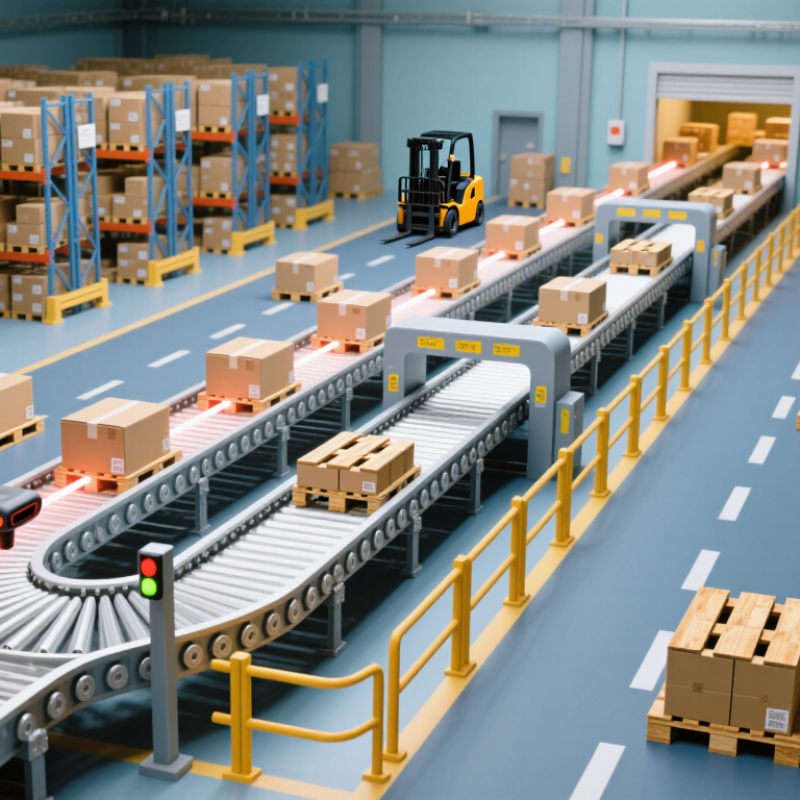
When warehouse teams handle heavy loads every hour, manual movement quickly becomes expensive and inconsistent. A Pallet Conveyor can create a steadier path between receiving, storage, picking, and shipping. Picture a loaded pallet leaving a staging lane, passing a barcode scanner, and reaching a shipping dock without repeated forklift trips. That movement saves time and reduces unnecessary handling.

In real warehouse projects, conveyor selection depends on pallet weight, dimensions, traffic volume, and available floor space. Roller conveyors suit many standard pallets and support predictable, controlled movement. Powered sections can maintain flow, while accumulation zones prevent pallets from pressing against one another. Safety sensors, guards, emergency stops, and clear access routes also require careful planning. Small details matter. A poor layout can create delays instead of removing them.

Industry experience shows that automation works best when equipment matches the operation, not when technology is added for appearance. A Pallet Conveyor may improve throughput, reduce product damage, and give supervisors clearer visibility. However, it is not a universal solution. Irregular pallets, fragile goods, changing order patterns, or limited maintenance skills may affect performance. I have seen efficient systems lose value when staff training and cleaning routines were overlooked. That lesson deserves attention. Reliable results come from practical design, accurate data, professional installation, and regular review. Warehouses should measure travel time, stoppages, labor use, and error rates before judging the investment. The answer is often clear, but not always immediate.

Why Choose a Pallet Conveyor for Warehouse Automation?

What Is a Pallet Conveyor and How Does It Work?

A pallet conveyor is a powered system that moves loaded pallets through a warehouse. It may use rollers, chains, or belts, depending on pallet weight and surface condition. Unlike manual forklifts, it follows a planned route between storage, production, and shipping areas. The conveyor frame supports the load while motors provide controlled movement. Sensors detect each pallet’s position and help prevent collisions.

Here is how the process usually works. A pallet enters the conveyor through a loading station. Photoelectric sensors confirm its arrival and check whether the path is clear. The control system then starts the correct drive section. Rollers move the pallet forward, while stops hold it at inspection or transfer points. At a junction, a lift or transfer unit can change its direction. Accumulation zones allow several pallets to wait safely without continuous contact.

Small details matter. Pallet dimensions, bottom-board spacing, and load balance must match the conveyor design. A damaged pallet can stall the line or create a safety risk. Regular checks should cover rollers, chains, sensors, guards, and emergency stops. In my experience, smooth automation depends as much on maintenance discipline as equipment capacity. The first layout is rarely final. Peak-season traffic, awkward pallet loads, and human access needs often reveal weaknesses later. A reliable system leaves room for inspection, adjustment, and safe manual intervention when conditions change.

Key Components and Conveyor Types for Warehouse Automation

Why Choose a Pallet Conveyor for Warehouse Automation?

Pallet conveyors provide controlled movement for heavy loads, repetitive routes, and precise storage locations. Their key components include rollers, chains, motors, drives, sensors, transfer units, and safety guarding. A programmable controller coordinates starts, stops, accumulation, and routing. Barcode or vision scanners can confirm each pallet’s identity before movement. According to the MHI 2024 Annual Industry Report, 55% of supply chain professionals planned to increase investment in robotics and automation. That trend makes reliable conveyor architecture increasingly important.

Powered roller conveyors suit standard pallets and moderate sorting requirements. Chain conveyors handle heavier or uneven loads, especially at transfer points. Belt conveyors offer stable support, but they may require more cleaning and maintenance. Gravity roller sections can reduce energy use in short, controlled zones. Accumulation conveyors create temporary spacing, preventing pallets from colliding near workstations. Sortation systems direct loads toward shipping doors, storage aisles, or inspection areas. Small details matter, such as roller spacing under a weak pallet deck.

Choosing components should follow pallet weight, dimensions, throughput, floor conditions, and future growth. Interact Analysis has projected the warehouse automation market to reach about 41 billion dollars by 2027. However, bigger automation is not automatically better. A faster conveyor can expose bottlenecks at picking or loading stations. The choice is rarely perfect. Operators should test real pallets, observe maintenance access, and review failure points before installation. Safety sensors, emergency stops, and guarded transfer areas must remain practical, visible, and easy to inspect.

Why Choose a Pallet Conveyor for Warehouse Automation? — Key Components and Conveyor Types for Warehouse Automation
Category Component or Conveyor Type Primary Function Typical Technical Data Automation Value Recommended Use
Load Standard Common Pallet Footprint Defines the conveyor width, roller pitch, guides, and transfer clearances. 1,200 × 800 mm and 1,200 × 1,000 mm are widely used industrial pallet footprints. Improves system compatibility and simplifies pallet-handling calculations. Distribution centers, manufacturing warehouses, and automated storage areas.
Load Standard Design Load Capacity Supports the total pallet, product, and packaging weight. Common conveyor designs handle approximately 500–1,500 kg per pallet; heavier designs may exceed this range. Allows stable transport of dense or irregular loads without manual intervention. Bulk goods, finished products, raw materials, and production-line buffers.
Conveyor Type Powered Roller Conveyor Moves pallets using motor-driven rollers. Typical operating speed: about 0.1–0.5 m/s; load capacity commonly ranges from 500–1,500 kg per pallet. Provides controlled movement, accumulation, and accurate pallet positioning. Main transport lines, accumulation zones, pallet infeed, and pallet dispatch.
Conveyor Type Chain Conveyor Transfers pallets on parallel chains with minimal contact between the pallet deck and the conveyor. Typical capacity: approximately 500–2,000 kg per pallet; useful for pallets with uneven or damaged bottom boards. Offers strong traction and reliable handling of heavy or non-standard pallet bases. Heavy-duty transfer sections, production interfaces, and pallet turntables.
Conveyor Type Belt Pallet Conveyor Uses continuous belts to transport pallets or palletized loads. Typical speed: about 0.1–0.4 m/s; capacity depends on belt width, belt type, and drive configuration. Provides smooth movement and good traction for loads that may slip on rollers. Clean handling areas, packaged goods, and applications requiring low-impact conveying.
Conveyor Type Non-Powered Roller Conveyor Uses gravity or manual force to move pallets over free-rolling rollers. Requires a suitable slope for gravity flow; commonly used for short distances and low-throughput zones. Reduces energy consumption and equipment cost where powered movement is unnecessary. Staging lanes, inspection points, manual loading, and low-volume work areas.
Conveyor Type Pallet Transfer Unit Moves pallets laterally between parallel conveyor lines. Common configurations use chain transfer, belt transfer, or lift-and-carry mechanisms; travel is generally 90° to the main flow. Connects production lines, storage aisles, and routing lanes without manual handling. Cross transfers, lane changes, sorting areas, and workstation connections.
Conveyor Type Pallet Turntable Rotates a pallet to change its travel direction or orientation. Common rotation angles include 90° and 180°; positioning accuracy depends on the drive and control system. Enables compact layouts and controlled pallet orientation at intersections. Warehouse corners, aisle entrances, packaging lines, and routing junctions.
Conveyor Type Lift Conveyor Raises or lowers pallets between different elevations. Vertical travel and capacity are project-specific; typical systems include safety gates, position sensors, and mechanical brakes. Connects mezzanines, production floors, storage levels, and elevated conveyor lines. Multi-level warehouses and facilities with limited floor space.
Drive System Geared Motor and Drive Unit Provides torque to rollers, chains, or belts. Variable-speed drives commonly enable controlled acceleration, deceleration, and speed adjustment. Improves energy efficiency, reduces product shock, and supports synchronized movement. High-throughput lines, accumulation zones, and variable-load applications.
Control System PLC and Conveyor Controller Coordinates motors, sensors, zones, routing logic, and fault responses. Supports zone control, interlocks, emergency-stop logic, and communication with warehouse-management or warehouse-control systems. Enables automatic routing, status monitoring, diagnostics, and scalable expansion. Integrated pallet conveyor systems and automated distribution centers.
Detection Photoelectric and Presence Sensors Detect pallet position, occupancy, gaps, and transfer completion. Common sensing methods include diffuse, retro-reflective, and through-beam detection. Prevents collisions and allows each conveyor zone to operate according to real-time pallet conditions. Accumulation conveyors, transfers, lifts, and loading or unloading points.
Identification Barcode or RFID Identification Associates a pallet with its product, destination, batch, or storage location. Identification can be performed at conveyor entry, routing points, storage interfaces, and dispatch stations. Improves traceability and supports automatic sorting and inventory accuracy. Order fulfillment, batch control, return handling, and automated storage systems.
Accumulation Zero-Pressure Accumulation Stores pallets in separate zones without direct pallet-to-pallet contact. Each zone is controlled independently using sensors and motor or clutch logic. Reduces product damage, minimizes congestion, and maintains controlled spacing. Buffer storage, order sequencing, production staging, and dispatch preparation.
Guidance Side Guides and Pallet Stops Keeps pallets aligned and controls their stopping position. Guide spacing and stop height must be matched to the pallet footprint and load overhang. Improves positional accuracy for scanning, transferring, wrapping, and robotic handling. Conveyor curves, transfer points, scanners, lifts, and robotic workstations.
Safety Emergency Stops and Guarding Protects personnel from moving equipment and hazardous access points. Typical provisions include emergency-stop devices, fixed guards, access doors, safety switches, and warning indicators. Supports safe operation, controlled maintenance access, and compliance with applicable local regulations. All automated pallet conveyor installations, especially high-speed and restricted-access zones.
Maintenance Modular Conveyor Sections Allows individual conveyor zones or components to be isolated and replaced. Common modules include straight sections, curves, transfers, turntables, lifts, sensors, and drive assemblies. Shortens troubleshooting time and supports phased system expansion. Large warehouses requiring high availability and planned maintenance.
Business Benefit Warehouse Automation Integration Links pallet movement with storage, picking, production, and shipping processes. Integration may include warehouse-management, warehouse-control, manufacturing-execution, and enterprise-resource-planning systems. Improves throughput, labor utilization, inventory visibility, and repeatable handling performance. Facilities seeking consistent pallet flow and reduced manual transport.
Technical values are representative planning ranges rather than universal specifications. Final conveyor selection should be verified against pallet dimensions, load distribution, duty cycle, layout, operating environment, safety requirements, and applicable standards.

How Pallet Conveyors Improve Material Flow and Storage Efficiency

Why Choose a Pallet Conveyor for Warehouse Automation?

In a busy warehouse, pallet conveyors turn scattered movement into a visible, repeatable flow. Loaded pallets travel between receiving, storage, picking, and shipping with fewer forklift crossings. That separation can reduce congestion and make pedestrian areas easier to manage. Operators can watch accumulation zones, scan points, and transfer stations without chasing every load. Small gains matter. A steady conveyor rhythm often shortens waiting time at the dock. When pallets arrive in a planned sequence, storage locations become easier to assign and retrieve.

Good system design starts with pallet dimensions, load weights, surface conditions, and daily volume. Engineers should match conveyor speed to workers, scanners, lifts, and storage software. Poor matching creates jams, noise, or idle equipment. In practical warehouse assessments, the most expensive problem is often an overlooked transition. A slightly uneven handoff can stop a full line. Regular inspections of rollers, sensors, guards, and emergency stops support dependable operation. Data from cycle times and blocked zones can reveal where capacity is genuinely needed. Still, conveyors are not magic. They may limit flexibility when product sizes change or layouts evolve. A modular design helps, but it costs more initially and requires disciplined maintenance.

Safety, Scalability, and Integration with Warehouse Management Systems

A pallet conveyor supports safer warehouse automation when its design matches real operating conditions. Guarding, emergency stops, photoelectric sensors, and controlled transfer points can reduce contact with moving equipment. OSHA recorded 2.6 million nonfatal workplace injuries in private industry during 2023. That figure reinforces a practical point: safety cannot be added after installation. Operators need clear walkways, visible indicators, and simple lockout procedures around every conveyor zone.

Scalability is equally important. A modular conveyor layout can add accumulation lanes, lifts, or inspection stations without rebuilding the entire floor. MHI’s 2024 Annual Industry Report reported that 55% of respondents planned to increase automation investment over the next two years. Pallet conveyors can support this direction, but expansion should follow actual throughput data. More equipment does not always mean more capacity. That assumption deserves testing.

Integration with a warehouse management system creates the operational value. Each pallet can carry a unique identifier, destination, status, and timestamp. Scanners and programmable controls then share movement data with the WMS through standard interfaces. The system can release work, confirm storage, trigger replenishment, and flag stalled pallets. Gartner’s research on supply chain technology repeatedly emphasizes connected data and real-time visibility as foundations for better execution. In practice, integration failures still happen when item dimensions, location codes, or exception rules are incomplete. Pilot testing with live-like orders is slower, but it exposes those weaknesses before full deployment.

Why Choose a Pallet Conveyor for Warehouse Automation?

Pallet conveyors support safer material movement, modular capacity expansion, and reliable data exchange with warehouse management systems.

The indexed values use a 100-point manual-handling baseline. Pallet conveyor automation can improve safety through controlled movement and emergency-stop access, scale through modular conveyor zones, and strengthen WMS integration through barcode or RFID identification, routing logic, and real-time status updates. Actual results depend on layout, pallet weight, throughput, and control-system design.

Planning reference: OSHA conveyor guarding and lockout requirements, ANSI/ASME B20.1 conveyor safety guidance, and common WMS warehouse-control integration practices.

Factors to Consider When Selecting a Pallet Conveyor System

Why Choose a Pallet Conveyor for Warehouse Automation?

Selecting a pallet conveyor system requires more than comparing transport speeds. Start with pallet size, load weight, surface condition, and expected throughput. A practical test should include damaged pallets, uneven loads, and peak-hour traffic. Smooth pallets are not enough.

Accumulation design matters when operators need temporary storage between processes. Zero-pressure zones can reduce contact damage, but they may increase controls and maintenance requirements. Confirm the required rate in pallets per hour, then test real loads. MHI’s 2024 Annual Industry Report reported that 55% of supply chain leaders planned to increase technology investment within two years. That investment should solve a measured bottleneck, not create an impressive display.

Available floor space, noise, safety access, and future expansion also influence the decision. Measure aisle widths and maintenance clearances before approving the layout. The International Federation of Robotics reported 541,302 industrial robots were installed globally in 2023, showing the wider move toward automated material handling. Yet conveyors still need reliable human interaction points. Guarding, emergency stops, sensor placement, and restart procedures deserve careful review.

Energy use and lifecycle cost can change the preferred design. A heavy-duty conveyor may last longer, but it can consume more power and complicate relocation. Ask for component life estimates, spare-part availability, and preventive-maintenance intervals. Integration with warehouse software should be tested using lost labels, blocked zones, and delayed scans. These failures are inconvenient. They are also realistic. A system that performs perfectly during a demonstration may still need redesign after one difficult season.