
News
What Are the Top 10 Types of Mens Watches?
Choosing among Mens Watches is rarely a simple matter of appearance. A polished dress watch may suit a boardroom, while a rugged field watch feels better beside a canvas backpack. This guide examines the top 10 types of Mens Watches, including dive, pilot, chronograph, GMT, racing, luxury sports, digital, and smartwatch designs. Each category serves a different purpose, even when marketing language makes them sound similar.
The late master watchmaker George Daniels described a watch as “a machine for measuring time.” That idea remains useful, but modern watches also express taste, routine, and personal history. A rotating bezel can help track diving minutes. A chronograph can measure a short interval. A GMT hand can follow a second time zone across continents. Small details matter.
This overview weighs movement type, durability, legibility, comfort, water resistance, maintenance, and genuine daily usefulness. It also considers how a watch wears after several hours, not merely how it looks in a product photograph. Manufacturer specifications provide an essential starting point, while hands-on experience reveals weaknesses such as stiff crowns, noisy rotors, or bracelets that pull arm hair.
Some rankings will remain debatable. They should. Personal style changes the answer. A costly mechanical watch is not automatically better than a reliable quartz model. Nor is a smartwatch always the practical winner. The best choice depends on the wearer, the setting, and the responsibilities placed on the watch. Expect clear comparisons, realistic limitations, and a closer look at what each type contributes to everyday life.
Definition and Key Features of Men’s Watches
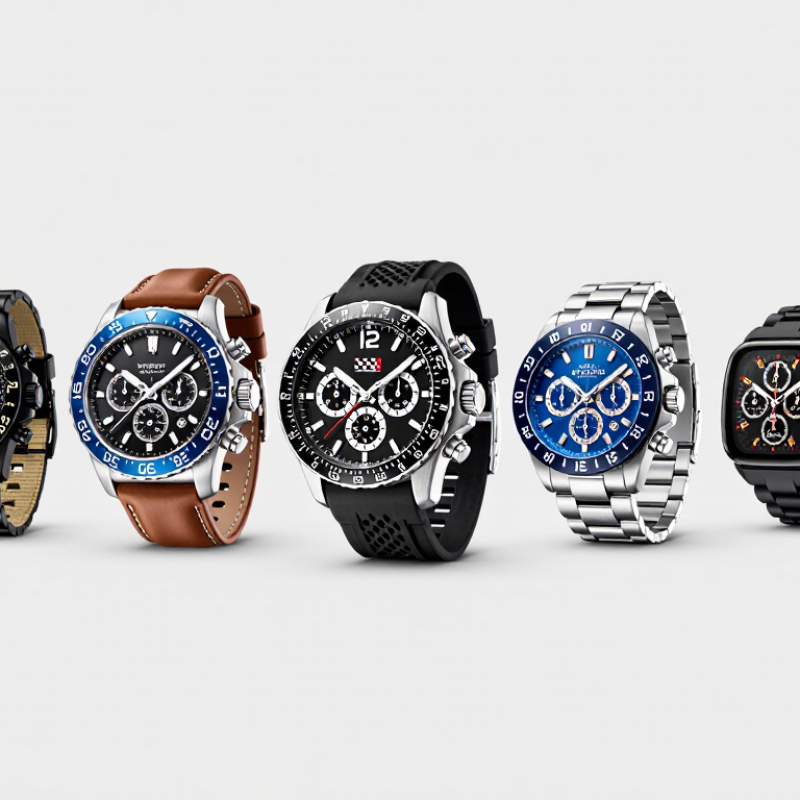
Men’s watches are timekeeping instruments designed around function, comfort, and personal style. The top ten types include dress, dive, field, pilot, chronograph, GMT, sports, digital, smart, and skeleton watches.
A dress watch usually has a slim case and a clean dial. Dive watches need strong water resistance, luminous markers, and a rotating timing bezel. Field watches favor readability, toughness, and simple numerals. Pilot watches often use large hands and high-contrast displays.
Chronographs measure short intervals with extra subdials. GMT watches track another time zone. Sports Watches prioritize flexible materials and shock resistance. Digital watches display time electronically. Smart watches add connected functions. Skeleton watches reveal parts of their mechanical movement.
Key features deserve closer attention than appearance alone. Case size affects comfort, especially under a shirt cuff. A reliable movement should keep consistent time and receive suitable maintenance. Water resistance is measured under controlled conditions, so it does not guarantee safety during every swim. Sapphire-like crystal materials resist scratches, while mineral crystal may reduce cost. Straps should match daily use, skin sensitivity, and climate.
In my experience, a perfect-looking watch can feel awkward after several hours. That detail is easy to miss.
Tips: Check the case diameter against your wrist. Test the clasp before buying. Read the water-resistance rating carefully. For frequent travel, compare GMT and smart functions. For formal clothing, choose a restrained dial. Keep realistic expectations; mechanical watches may show small timing differences. A watch should serve your routine, not only your photograph.

Dress Watches: Formal Design and Everyday Elegance
Among the top ten types of men’s watches, the dress watch remains a quiet standard. Its design usually features a slim case, clean dial, narrow hands, and restrained colors. This simplicity works with a tailored suit, but it can also soften a plain shirt and dark trousers. I find a modest watch more useful than an overly decorated one. It does not compete with cufflinks or polished shoes.
A dress watch should sit comfortably beneath a shirt cuff. A case around 36 to 40 millimeters often looks balanced, though wrist size matters more than fashion rules. A leather strap creates a traditional, formal impression. A metal bracelet feels sharper and may suit everyday office wear. Check the clasp, stitching, and crystal carefully. Small flaws become annoying during daily use.
Details matter in real situations. A clear dial helps during meetings, while excessive shine can distract under bright lights. Water resistance is worth checking, even if swimming is not part of your routine. Dress watches are not always practical for rough outdoor work. I once chose an elegant, very thin model that scratched easily, and that choice still seems questionable. A slightly stronger case may offer better everyday value. Proper storage and occasional servicing also help preserve accuracy and appearance.
Dive Watches: Water Resistance and Underwater Functionality
Among the top ten types of men’s watches, dive watches stand apart through measurable underwater performance. ISO 6425:2018 sets 100 metres as the minimum water-resistance rating for a diver’s watch. It also requires pressure testing at 125% of the marked rating. A rotating timing bezel, luminous markers, and a secure strap support practical diving tasks. Water resistance is not a depth promise. It describes controlled testing conditions.
Fortune Business Insights’ 2024 Global Watch Market report valued the global watch market at about 75.94 billion US dollars in 2023. That growth encourages more buyers to compare technical specifications, not only appearance. In daily use, screw-down crowns and strong case seals matter greatly. Salt water, sweat, and repeated temperature changes can weaken those seals. I have found one assumption worth challenging: a 200-metre rating does not make every watch suitable for professional diving. Certification matters more than a large number on the dial.
Tips: Check whether the watch follows ISO 6425, not merely a general water-resistance test. Rinse it with fresh water after seawater exposure. Never operate the crown underwater. Have the seals inspected regularly, especially after opening the case. A pressure test is wiser than guessing. Rescue timing depends on equipment, training, and visibility, so the watch should support a dive plan, not replace one.
Dive Watches: Water Resistance and Underwater Functionality
Approximate absolute water pressure increases by about 1 bar for every 10 metres of seawater depth.
A certified diver’s watch is generally tested for at least 100 metres of water resistance under ISO 6425 requirements. Higher ratings provide greater pressure tolerance, but the printed depth rating is based on controlled laboratory testing and should not be treated as an exact real-world diving limit. Water temperature, movement, impacts, seals, and aging can reduce practical resistance.
Field Watches: Practical Timekeeping for Outdoor Use
What Are the Top 10 Types of Mens Watches?
Field Watches: Practical Timekeeping for Outdoor Use
Among the ten main types of men’s watches, field watches are built for movement, clarity, and changing weather. Their design comes from practical outdoor timing, where reading the hour quickly matters more than decoration. A clear dial, strong hands, and visible markers help during hiking, camping, or hands-on work. Many field watches use compact cases, which reduce snagging on jacket cuffs or backpack straps. A lightweight fabric or leather strap can also improve comfort during long walks.
Real-world use reveals important details. Test the watch in bright sunlight, shade, and low evening light before trusting its readability. A reliable quartz movement often offers excellent accuracy with minimal maintenance, while a mechanical movement brings craftsmanship but may need regular adjustment. Water resistance is useful, but it does not make every watch suitable for swimming. Small differences matter.
Tips: Choose a dial with strong contrast and simple numerals. Check the crown and case edges for comfortable wear. Match the strap to your activity, because wet leather can age poorly. Keep the crystal clean for sharper reading. A scratch-resistant material helps, though no surface stays perfect forever.
Some field watches include a second time scale, which can help with planning travel or tracking short tasks. However, extra markings may create visual clutter. I prefer restraint, but that preference is not universal. The best choice depends on your eyesight, routine, and tolerance for maintenance.
Chronographs, Pilot Watches, and Other Specialized Types
What Are the Top 10 Types of Mens Watches?
Chronographs, Pilot Watches, and Other Specialized Types
The ten most useful categories include dress, field, dive, pilot, chronograph, racing, GMT, military, calendar, and smartwatch designs. Each solves a different problem. A chronograph measures elapsed time, while a GMT tracks another time zone. A pilot watch favors clear numerals and strong contrast. A dive watch needs a rotating timing bezel and water resistance. These features matter more than decoration when your wrist faces rain, glare, or hurried travel.
My own wrist-time suggests that field and pilot watches are easiest to wear daily. Chronographs feel more engaging, but their extra pushers can catch on a jacket cuff. The categories overlap. That is the awkward part. A racing watch may also be a chronograph, while a military design can resemble a field watch. Buyers should check legibility, case thickness, strap comfort, and service access before choosing a style.
Industry data gives this market useful context. The Federation of the Swiss Watch Industry reported watch exports of about CHF 26.0 billion in 2024, despite a 2.8% annual decline. Deloitte’s 2024 Swiss Watch Industry Study surveyed 75 industry executives, highlighting continued pressure from changing consumer preferences and digital competition. Those findings support a practical approach: choose complications for real routines, not impressive specifications. A calendar display helps at work. A GMT function helps across borders. A smartwatch offers notifications, though battery dependence remains an obvious weakness.
What Are the Top 10 Types of Men's Watches? - Chronographs, Pilot Watches, and Other Specialized Types
A practical comparison of major men's watch categories, their defining functions, and typical applications.
| Rank | Watch Type | Primary Purpose | Defining Features | Common Complications | Typical Water Resistance | Best Suited For |
|---|---|---|---|---|---|---|
| 1 | Chronograph Watch | Measuring elapsed time | Independent stopwatch function, pushers, and one or more sub-dials | Stopwatch seconds, minutes, hours, tachymeter, date | 30–100 metres | Timing activities, motorsport enthusiasts, and everyday wear |
| 2 | Pilot or Aviator Watch | Fast and clear time reading during flight | Large dial, high contrast, bold numerals, and strong legibility | Date, dual time, chronograph, power-reserve indicator | 30–100 metres | Aviation professionals, travelers, and casual wearers who value readability |
| 3 | Diving Watch | Underwater timekeeping | Rotating timing bezel, luminous markers, screw-down crown, and robust case | Date, elapsed-time bezel, helium-release valve on some professional models | 200–1,000+ metres | Swimming, recreational diving, watersports, and rugged daily use |
| 4 | Field Watch | Reliable outdoor timekeeping | Simple dial, durable case, compact profile, and clear hour markers | Date, 24-hour scale, luminous hands and markers | 30–100 metres | Hiking, travel, outdoor work, and versatile everyday wear |
| 5 | Dress Watch | Formal and professional presentation | Slim case, restrained dial, minimal decoration, and leather or refined bracelet | Small seconds, date, moon phase, power reserve | 30–50 metres | Business attire, ceremonies, dinners, and formal occasions |
| 6 | GMT or World-Time Watch | Tracking multiple time zones | Additional 24-hour hand, rotating bezel, or world-time city ring | GMT, world time, date, day-night display | 30–100 metres | Frequent travelers, international business users, and remote teams |
| 7 | Racing Watch | Timing laps, speed, and performance intervals | Chronograph layout, high-contrast scale, and tachymeter or pulsometer markings | Chronograph, tachymeter, telemeter, date | 50–100 metres | Track-day participants, cycling, athletics, and motorsport fans |
| 8 | Tactical or Military-Style Watch | Durable, discreet timekeeping in demanding conditions | Matte surfaces, subdued colors, shock resistance, and strong night visibility | 24-hour display, compass bezel, date, chronograph | 50–200 metres | Camping, field operations, emergency work, and rugged outdoor use |
| 9 | Skeleton or Open-Heart Watch | Displaying mechanical movement design | Visible gears, bridges, balance wheel, or a partially exposed dial | Small seconds, power reserve, tourbillon on selected high-complexity models | 30–100 metres | Mechanical-watch enthusiasts and statement styling |
| 10 | Smartwatch or Connected Watch | Digital notifications, activity tracking, and mobile functions | Electronic display, sensors, wireless connectivity, and rechargeable battery | Heart-rate monitoring, GPS, sleep tracking, notifications, contactless payments | 30–100 metres, depending on the model | Fitness, commuting, navigation, communication, and health monitoring |
Note: Water-resistance ratings and available functions vary by model. A stated rating indicates test conditions and does not automatically mean the watch is suitable for every type of water activity.