
News
China Top 10 Cargo Electric Bike Manufacturers?
cargo electric bike demand is changing urban logistics, especially where vans face traffic, parking costs, and restricted access. The International Energy Agency’s Global EV Outlook 2024 identifies electric two- and three-wheelers as the world’s largest electrified road-transport segment by volume. China remains a major production center, supported by mature battery, motor, frame, and controller supply chains. However, production scale does not automatically prove product quality.
This guide examines China’s top 10 cargo electric bike manufacturers through practical commercial criteria. These include payload design, battery-management systems, braking performance, range testing, factory experience, international certifications, spare-parts support, and OEM flexibility. The European Cyclists’ Federation has also highlighted cargo bikes as a viable option for a significant share of urban delivery trips, particularly in dense districts with short routes. A rider carrying parcels through a narrow commercial street needs more than a powerful motor. They need stable steering, predictable braking, weather-resistant wiring, and a frame that survives repeated loading.
The ranking is not absolute. Public specifications can differ from tested performance. Some manufacturers publish impressive range figures under light loads and ideal conditions. That deserves careful review. Buyers should request independent test results, battery documentation, warranty terms, and references from operating fleets. Real experience matters here: a cargo electric bike used beside warehouses may face different demands from one used for food delivery. This introduction provides a practical starting point for comparing leading Chinese manufacturers and identifying suppliers that fit specific delivery, retail, and mobility projects.
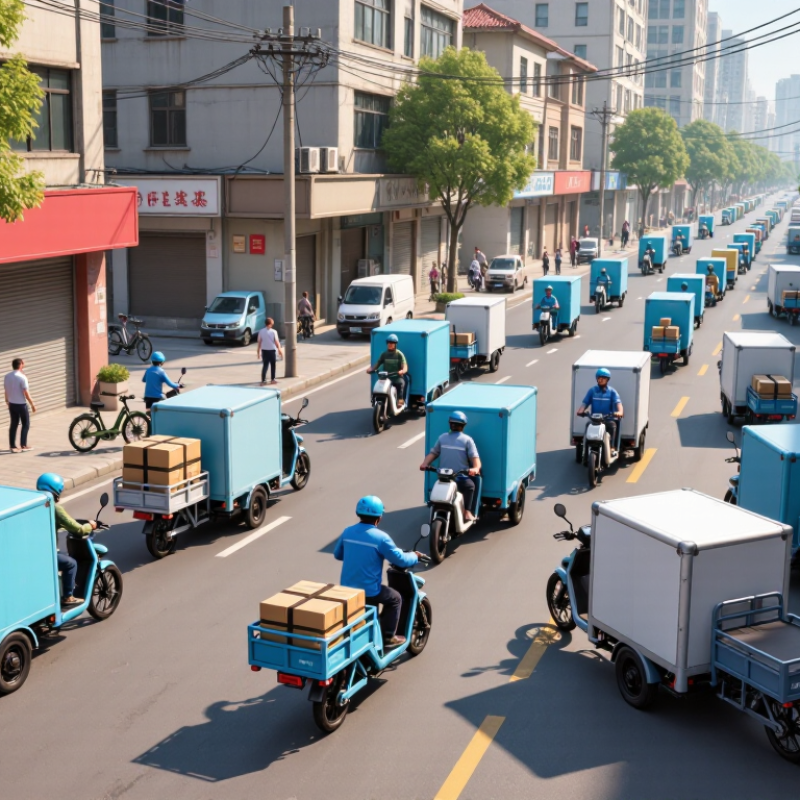
What Defines a Leading Chinese Cargo Electric Bike Manufacturer?
A leading Chinese cargo electric bike manufacturer is defined by more than production volume. China Bicycle Association industry data recorded over 40 million electric bicycle units produced in 2023. This scale matters, but it does not prove cargo expertise. The IEA Global EV Outlook 2024 also identifies China as the dominant market for electric two-wheelers worldwide. Serious manufacturers translate that experience into stronger frames, stable braking, and tested battery protection.
In factory evaluations, engineers should verify payload tests, welding consistency, motor temperature, and controller durability. A delivery bike carrying 150 kilograms needs predictable handling on wet roads, not impressive showroom numbers. Battery cells require traceable sourcing, secure enclosures, and protection against overcharging and impact. The European Cargo Bike Industry Survey has repeatedly reported growing commercial demand, especially for urban deliveries. That demand rewards manufacturers offering modular boxes, replaceable parts, and documented service procedures.
Documentation matters. So does listening.
A reliable supplier should provide test records, charging guidance, spare-part schedules, and clear warranty limits. Production audits should examine random units, not only prepared samples. Yet no checklist is perfect. A leading manufacturer may still overlook noise, rider fatigue, or a poorly placed kickstand during early testing. Honest feedback loops, field trials, and corrective engineering reveal more than polished certifications. The strongest Chinese manufacturer combines manufacturing depth with evidence that its cargo bikes survive daily loading, stopping, charging, and repair.
China Top 10 Cargo Electric Bike Manufacturers? - What Defines a Leading Chinese Cargo Electric Bike Manufacturer?
| No. | Evaluation Dimension | Reliable Industry Benchmark | What a Leading Manufacturer Should Demonstrate | Verification Evidence |
|---|---|---|---|---|
| 1 | Product Safety and Compliance | For EU EPAC products, EN 15194 covers electrically assisted cycles with assistance up to 25 km/h and a rated continuous motor power up to 250 W. | A clearly defined target market, compliant electrical systems, documented risk controls, and traceable technical files. | Test reports, declarations of conformity, technical documentation, and market-specific compliance records. |
| 2 | Load-Carrying Capability | Cargo-bike payload ratings vary by frame, wheelbase, brake system, tires, rack design, and intended use; there is no single universal payload rating. | Published ratings for rider, cargo, front rack, rear rack, and total permissible mass, supported by structural testing. | Frame fatigue tests, static load tests, rack test results, and a clearly printed payload label. |
| 3 | Frame and Chassis Engineering | Cargo bicycles require reinforced frames, stable geometry, strong dropouts, and load-appropriate wheels and axles. | Computer-aided design, controlled welding processes, corrosion protection, dimensional inspection, and repeatable frame quality. | Material specifications, welding inspection records, coating tests, and sample frame test reports. |
| 4 | Motor and Drivetrain Matching | Cargo applications place greater demands on low-speed torque, hill-start performance, thermal control, and drivetrain durability than ordinary bicycles. | Motor, controller, gearing, wheel size, and gross vehicle mass are engineered as one system rather than selected independently. | Hill-climb testing, thermal test data, controller specifications, torque curves, and long-duration road tests. |
| 5 | Battery Safety and Management | Lithium-ion battery safety depends on cell quality, battery-management systems, mechanical protection, charging controls, and transport compliance. | Documented cell sourcing, overcharge and over-discharge protection, temperature monitoring, secure mounting, and serviceable battery design. | Battery test reports, BMS specifications, UN 38.3 transport documentation, and charger safety records. |
| 6 | Braking and Handling | A longer and heavier cargo cycle needs braking performance and stability appropriate to its maximum permissible mass and operating environment. | Load-rated brakes, balanced weight distribution, controlled steering, parking stability, and predictable performance on wet surfaces. | Braking-distance tests, wet-condition testing, steering tests, parking-stand validation, and component load ratings. |
| 7 | Manufacturing Quality Control | Consistent production requires documented incoming inspection, process control, final inspection, and traceability. | A functioning quality-management system with serial-number traceability from key components through finished-bike inspection. | Quality manuals, inspection checklists, calibration records, corrective-action reports, and factory audit results. |
| 8 | Customization and Product Development | Cargo-bike buyers may require different boxes, racks, seating systems, wheel sizes, electrical settings, and delivery configurations. | In-house engineering support, controlled drawings, prototype capability, design validation, and documented change management. | Engineering drawings, prototype records, bill-of-materials control, pilot-run reports, and sample approval procedures. |
| 9 | After-Sales Service and Spare Parts | Commercial fleets depend on parts availability, repair documentation, diagnostic support, and a practical warranty process. | A defined warranty policy, spare-parts catalog, service manuals, troubleshooting support, and stable replacement-part availability. | Warranty terms, parts lists, service-level commitments, fault-code documentation, and customer-support procedures. |
| 10 | Delivery Reliability and Sustainability | Reliable supply depends on production capacity, component planning, packaging controls, shipping preparation, and responsible material management. | Stable production planning, documented lead times, export packaging tests, battery-shipping capability, and measurable environmental practices. | Production schedules, capacity records, packaging drop-test results, shipping documents, and environmental-management records. |
Note: Manufacturer rankings should be based on verified audits, product testing, compliance documentation, warranty performance, and customer references rather than product claims alone.
