
News
How to Choose the Right Rail Crossing Signal?
Choosing the right Rail Crossing Signal begins with the crossing, not the product brochure. Each site has different risks, traffic patterns, and operating limits.
The Federal Railroad Administration’s public Highway-Rail Crossing Inventory records more than 200,000 U.S. crossings. Its safety data also shows that crossing incidents remain a persistent transportation concern. These figures make signal selection a practical engineering decision, not merely a purchasing exercise. FRA guidance under 49 CFR Part 234 emphasizes reliable warning systems, inspection, maintenance, and predictable activation. AREMA’s Communications and Signals Manual provides additional industry guidance for railway signaling design and performance.
Look closely.
A suitable Rail Crossing Signal should match train speed, traffic volume, sight distance, track layout, pedestrian movement, and required warning time. Flashing lights may suit a low-complexity location, while gates, bells, active detection, and monitoring may be necessary near busy roads or schools. LED visibility, battery backup, diagnostic alerts, weather resistance, and local maintenance access also deserve careful review.
A checklist is helpful, but it cannot replace a site survey. That assumption can fail when vegetation grows, road traffic changes, or detection equipment ages. The U.S. Government Accountability Office has repeatedly highlighted the importance of accurate crossing data and targeted safety improvements. Therefore, decision-makers should compare engineering assessments, manufacturer test results, maintenance records, and applicable standards before selecting equipment. The best solution is not always the most advanced one. It is the system that delivers clear warnings, dependable operation, and measurable safety performance under real conditions.
Understanding Rail Crossing Signal Types and Their Roles
How to Choose the Right Rail Crossing Signal?
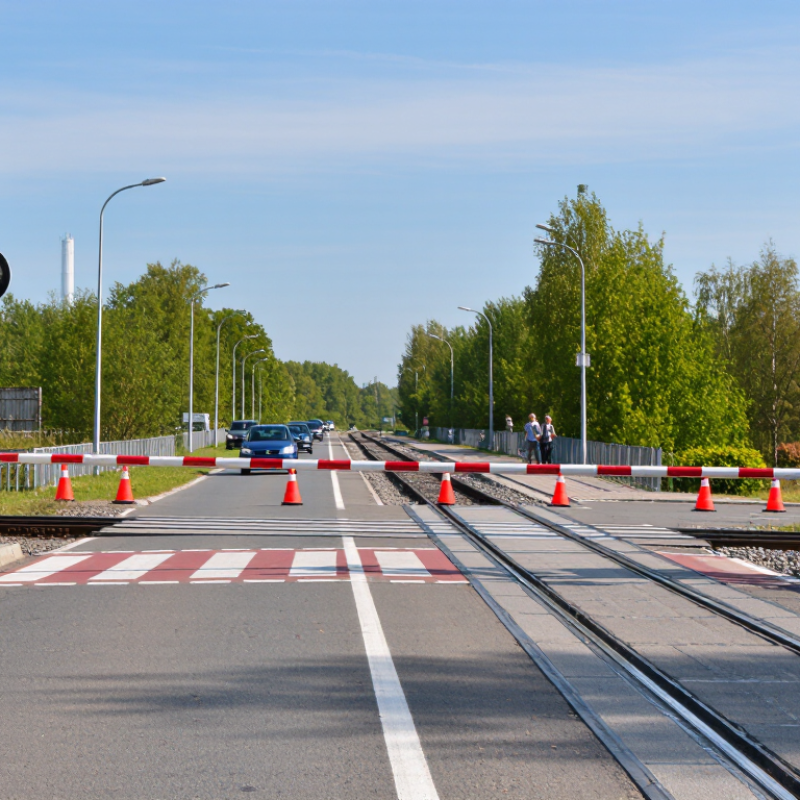
Rail crossing signals do more than warn drivers. They manage risk where road and rail movements meet. The right system depends on train speed, traffic volume, sight distance, track layout, and pedestrian activity. A quiet rural crossing may use passive signs and a crossbuck. A busy urban crossing usually needs active protection.
Passive signals provide information, but they do not react to an approaching train. Drivers must notice the sign, judge the track, and make a safe decision. Active signals respond automatically. Flashing red lights, audible bells, and warning gates create stronger, clearer instructions. Gates are especially useful where drivers might otherwise cross during a warning cycle. They are not perfect.
Pedestrian crossings need separate attention. A narrow walkway, poor lighting, or limited visibility can change the entire safety assessment. Signal timing should allow people with mobility challenges to clear the track comfortably. Equipment must also remain visible in rain, dust, darkness, and heavy traffic. During practical crossing reviews, engineers often examine sightlines from the driver’s position, not from a convenient office map. That detail matters. A system can meet a basic specification yet feel confusing at road level. Maintenance records, backup power, detection reliability, and local rail regulations should guide the final choice. Sometimes, adding more equipment is not the best answer; improving approach geometry or removing visual clutter may reduce risk more effectively.
How to Choose the Right Rail Crossing Signal? - Understanding Rail Crossing Signal Types and Their Roles
| Signal Type | Primary Role | Typical Indication | Best Used When | Key Selection Considerations |
|---|---|---|---|---|
| Crossbuck Sign | Provides a permanent, passive warning that a railway crossing is present. | Drivers must approach cautiously, look and listen for trains, and follow the applicable right-of-way rule. | Low-speed roads, private crossings, or locations where an active warning system is not required by the governing authority. | Visibility, road approach angle, traffic volume, train frequency, sight distance, and local regulations. A crossbuck alone does not actively detect or warn of an approaching train. |
| Stop Sign | Requires road users to stop before entering the crossing. | A complete stop is required, followed by checking that the tracks are clear. | Locations where a stop requirement is specifically established by the responsible road or rail authority. | Use only where legally authorized. It should not be treated as a substitute for active train detection or a gate system. |
| Flashing-Light Signal | Gives an active visual warning when a train is approaching or occupying the crossing. | Common road installations use two red lights that flash alternately; the exact arrangement depends on the applicable standard. | Public crossings with regular train movements, limited sight distance, or traffic conditions requiring more than a passive sign. | Evaluate lamp visibility in daylight, viewing distance, alignment, weather exposure, power reliability, and compatibility with the train-detection system. |
| Audible Bell or Warning Device | Provides an audible alert for people who may not see the visual signal. | A repeated warning sound normally operates during the active warning period. | Crossings with blocked sight lines, nighttime use, pedestrians, cyclists, or other users who may miss flashing lights. | Consider sound coverage, ambient noise, residential impact, hearing accessibility, operating duration, and local noise requirements. |
| Vehicle Gate | Visually and physically reinforces the instruction for road vehicles to stop before the tracks. | The gate descends across the road after the warning sequence begins and rises after the crossing is clear. | High-volume roads, multiple-track crossings, poor approach visibility, or locations where preventing vehicles from entering is critical. | Provide adequate warning time, escape space, obstruction detection, emergency procedures, clear road markings, and protection against vehicles driving around the gate. |
| Pedestrian Gate and Channelization | Directs pedestrians to a defined crossing path and discourages bypassing the warning system. | A gate or barrier closes the pedestrian approach during an active warning interval. | Stations, schools, urban areas, shared-use paths, and crossings with significant foot or bicycle traffic. | Maintain accessible routes, adequate clearance, visible escape areas, safe gate geometry, and suitable treatment for bicycles, wheelchairs, and mobility devices. |
| Cantilever or Overhead Signal | Places active warning lights above or over the roadway so they remain visible to approaching drivers. | Overhead flashing lights supplement roadside signals and may be paired with bells and gates. | Wide roads, multilane approaches, heavy traffic, frequent large vehicles, or locations where roadside signals can be hidden. | Check structural loading, clearance envelopes, wind exposure, maintenance access, lane coverage, and visibility from every approach lane. |
| Advance Warning Sign | Alerts road users before they reach the crossing, allowing earlier speed reduction and decision-making. | A permanent sign indicates that a railway crossing is ahead; supplemental signs may provide distance or roadway-specific information. | High-speed approaches, limited stopping distance, curves, grades, queues, or crossings that are difficult to see in advance. | Position signs for adequate reading time and ensure they do not replace the active protection required at the crossing itself. |
| Train-Activated Warning System | Detects an approaching train and automatically starts the warning sequence. | Detection equipment activates lights, bells, gates, or a combination of these devices according to the configured timing plan. | Crossings where train speed, traffic volume, multiple tracks, or sight-distance conditions require automatic active protection. | Assess approach length, train speeds, stopping distance, track layout, fail-safe behavior, backup power, diagnostics, maintenance, and regulatory approval. |
