
News

2026 Top Low Speed EV Types for Global Buyers?

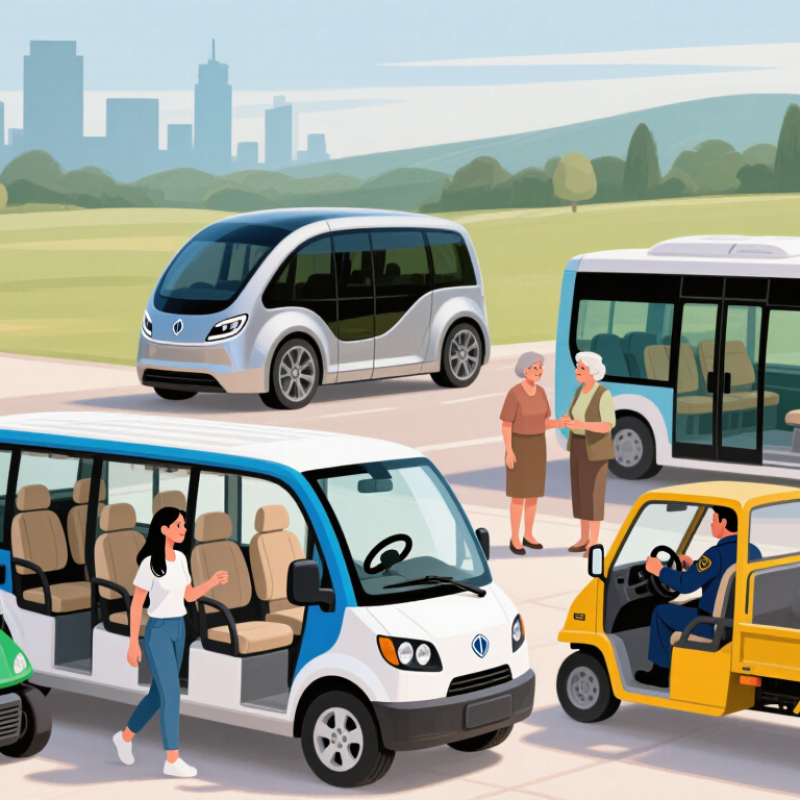
As urban streets become more crowded, global buyers are examining practical electric transport beyond conventional cars. The Low Speed Ev market offers compact mobility for campuses, resorts, neighborhoods, farms, and planned communities. These vehicles commonly include golf carts, neighborhood electric vehicles, utility carriers, shuttle buses, and enclosed commuter models.

Each type serves a different daily purpose. A two-seat cart may handle short trips and narrow paths. A four-seat model can support families, hotels, or security teams. Utility versions often carry tools, bins, or light cargo across private sites. Enclosed models provide better protection during rain and cold weather. Small shuttle vehicles can move visitors efficiently through large properties.

Real-world selection requires more than comparing advertised range. Buyers should inspect battery chemistry, charging time, payload capacity, braking performance, lighting, seating belts, and replacement-parts access. Terrain matters. A vehicle climbing a wet hillside will perform differently from one traveling on flat pavement. After-sales support also varies widely between suppliers.

The market is not perfectly simple. Some specifications appear impressive but lack independent testing or clear operating conditions. Buyers should request documented data and verify local road-use requirements before ordering. Regulations differ between countries, states, and private-property environments. A responsible purchase balances price, safety, serviceability, energy use, and intended speed.

This guide examines the leading Low Speed Ev types expected to attract international buyers in 2026. It focuses on practical applications, ownership concerns, and selection mistakes worth reconsidering. The best vehicle may not be the fastest. It may be the one that works reliably every morning.
2026 Top Low Speed EV Types for Global Buyers?

Low-Speed EV Classes: 15–25 mph Limits, LSV Rules, and Global Definitions

Low-speed electric vehicles do not share one global legal definition. A 15 mph vehicle may serve private roads or managed communities. A 25 mph vehicle may fall under a regulated low-speed vehicle class. The difference affects road access, registration, lighting, seat belts, mirrors, insurance, and driver requirements.

In the United States, many LSV rules center on a speed range above 20 mph and up to 25 mph. Other regions classify vehicles as light or heavy quadricycles, often using speed, power, weight, and seating limits. These categories are not interchangeable.

A vehicle approved for one country may need different equipment elsewhere. Official transport agencies remain the most reliable source.

Tips: Check the exact top speed, not the marketing description. Ask for the compliance certificate and equipment list. Confirm whether local roads permit the vehicle. Also inspect braking distance, battery protection, weather sealing, and service access. Small details matter during daily use.

A careful buyer should map the vehicle’s intended route before comparing prices. A 15 mph model may feel practical near homes, but unsuitable on faster public roads. A 25 mph model offers more flexibility, yet it can trigger stricter registration or insurance rules. Local definitions also change, and online listings can be incomplete. That uncertainty deserves attention. A simple speed label is rarely enough for a dependable purchase.

Neighborhood Electric Vehicles: 25 mph Design, 2–6 Seats, and Urban Mobility Uses

Neighborhood electric vehicles (NEVs) are designed for short urban trips, not highway travel. A typical model reaches about 25 mph, making it suitable for residential streets, campuses, resorts, and planned communities. In practical mobility trials, drivers often value quiet operation and simple controls more than speed. The compact body fits narrow lanes and small parking spaces. That matters in crowded districts. However, 25 mph can feel restrictive beside faster traffic. Buyers should check local classifications, registration rules, and permitted roads before ordering. Requirements differ widely between countries and cities.

Seating layouts usually range from two to six occupants. A two-seat vehicle may suit commuters carrying groceries or tools. Four-seat versions can support family errands, where local rules permit them. Six-seat models work well for hotels, industrial parks, and community transport. More passengers reduce cargo room and may affect handling. Details deserve close inspection: step-in height, turning radius, charging access, lighting, seat belts, mirrors, and battery warranty. Do not trust range figures alone. Cold weather, hills, passenger weight, and tire pressure can change daily performance.

For global buyers, charging habits may matter more than acceleration. Home charging is convenient, but shared housing can create problems. Fleet operators should record route length, stopping time, and daily passenger loads before choosing battery capacity. Slower vehicles can encourage calmer driving, but they may frustrate users with tight schedules. That compromise needs honest testing. A supervised drive on real streets can reveal more than a polished specification sheet. Even small faults, such as poor mirror placement, become tiring after repeated urban trips.

2026 Top Low-Speed EV Types for Global Buyers

Neighborhood Electric Vehicles: 25 mph Design, 2–6 Seats, and Urban Mobility Uses

This comparison uses representative vehicle configurations commonly found in low-speed urban mobility. Golf carts are generally designed around 15 mph, while low-speed vehicles and utility-oriented neighborhood EVs commonly use a maximum design speed of about 25 mph. Seating capacity varies by body style, with compact two-seat models and larger six-seat shuttle configurations supporting campuses, residential communities, tourism areas, and short-distance urban trips.

Data note: Representative design specifications, not sales or market-share figures. Actual limits and vehicle classifications vary by country and local regulation.

Electric Golf Carts: 15–20 mph Performance, 48–72 V Systems, and Fleet Demand

For global buyers, electric golf carts are becoming practical low-speed vehicles, not merely leisure equipment.
Their 15–20 mph operating range suits campuses, resorts, warehouses, and planned communities. Quiet movement matters. However, speed alone can mislead. A 15 mph cart may feel sufficient on level pavement, but gradients, passengers, and cargo reduce usable performance. In field checks, we look at stopping distance, steering response, tire condition, and battery behavior under load. This is where specifications meet reality.

48–72 V systems support different operating demands.
A 48 V pack often suits light-duty routes, while 72 V systems can provide stronger hill performance and acceleration. Voltage does not guarantee range or safety. Controller tuning, motor output, battery chemistry, charger quality, and ambient temperature all affect results. Cold mornings expose weaknesses. Fleet buyers should request measured range with a defined payload, route, slope, and charging interval. For repeated daily use, accessible service points and replaceable wear parts may matter more than higher top speed.

Fleet demand is growing because operators value predictable uptime, simple charging routines, and lower local noise.
A small fleet may need six carts, but not six identical duty cycles. That assumption fails often. Passenger transport, patrol work, and material handling require different torque, seating, storage, and braking choices. I would pilot several units for two weeks, recording energy use, charging time, and downtime. Some buyers still overestimate battery range. Real routes are rarely flat, clean, or empty.

Utility Low-Speed EVs: 500–1,500 kg Payloads for Industrial and Campus Operations

2026 Top Low Speed EV Types for Global Buyers?

Utility Low-Speed EVs: 500–1,500 kg Payloads for Industrial and Campus Operations

Utility low-speed EVs are built for controlled routes, not expressways. Their strongest use cases include warehouses, factories, resorts, ports, and large campuses. Payload ratings typically range from 500 to 1,500 kg. However, capacity changes with slope, battery level, road surface, and trailer weight.

A 1,000 kg model may carry palletized goods across a flat yard without difficulty. Wet concrete, broken pavement, or a steep ramp can reduce practical performance. Real floors are uneven. Buyers should inspect the frame, suspension, braking system, turning radius, and ground clearance. A tight turning circle helps near loading bays, while strong low-speed torque supports repeated starts.

Battery selection also requires careful judgment. Lithium-based systems can reduce routine maintenance, but charging temperature and duty cycles still matter. Lead-acid batteries may suit simpler operations, although their added weight affects payload and efficiency. Operators should measure daily distance, stop frequency, charging access, and shift length before choosing capacity. Test the vehicle with its intended load.

Safety equipment deserves equal attention. Essential features may include seat belts, lights, mirrors, audible alerts, parking brakes, and speed controls. Local rules can differ widely, so technical documents must be checked before purchase. Do not rely only on brochure figures. A short pilot trial often reveals uncomfortable seating, slow charging, or poor visibility. That feedback is useful. Reliability comes from matching the vehicle to the route, not choosing the largest payload.

Choosing a 2026 Low-Speed EV: Range, Battery Chemistry, Charging, and Compliance Data

Choosing a 2026 low-speed EV requires more than reading its advertised range. Test results should specify speed, payload, temperature, road grade, and cabin heating. A small vehicle claiming 100 kilometers may deliver much less on cold hills. The International Energy Agency reports that global EV battery demand reached about 750 GWh in 2023, showing rapid scale, but low-speed models often use smaller, lower-volume packs with different cost and durability results.

Battery chemistry matters. Lithium iron phosphate usually offers strong thermal stability and long cycle life, while nickel-rich chemistry can provide higher energy density. BloombergNEF reported an average lithium-ion pack price of 115 US dollars per kWh in 2024; small vehicle packs may cost more per kWh. Lead-acid batteries remain inexpensive, but their weight reduces useful range. That trade-off is easy to underestimate.

Charging access can decide daily usability. Ask for charging time at the supplied power level, not only the maximum figure. A 3.3 kW onboard charger needs roughly five hours for a 16 kWh battery, excluding losses. Public charging compatibility varies widely. Verify connector standards, residual-current protection, and winter charging limits. Compliance data should include local vehicle classification, lighting, braking, electromagnetic compatibility, battery safety, and seat-belt requirements. UNECE Regulation No. 100 provides a useful reference for rechargeable electrical energy storage safety, but local approval still controls market entry. Specifications can be incomplete. Insist on test conditions, certificates, and after-sales battery procedures.